
Learning the Quran is a meaningful journey that helps children develop religious knowledge, improve their Arabic reading skills, and understand important Islamic values. However, learning requires more than attending regular classes. Parents and teachers also need to understand how much a child has learned, which skills have improved, and which areas require additional attention.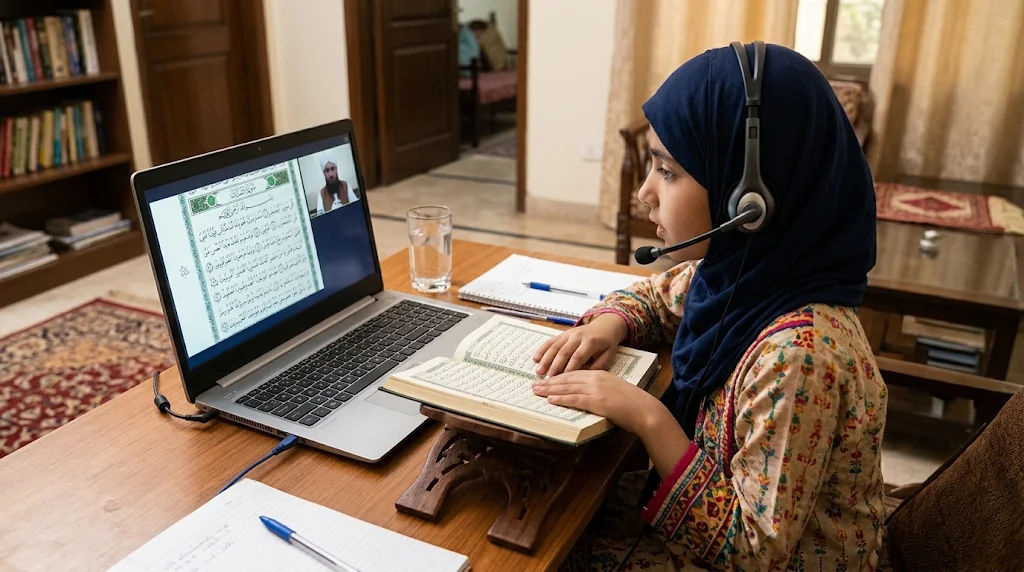
For families living in Denmark, online and in-person Islamic education can provide different opportunities to support children's Quranic development. A structured learning programme usually includes regular assessments, teacher feedback, memorisation reviews, and individual learning goals. These methods help children develop their abilities at a comfortable pace.
Quran lessons for kids in denmark often use organised progress-tracking methods to monitor reading accuracy, pronunciation, memorisation, Tajweed knowledge, and understanding of Quranic teachings. These methods allow teachers and parents to recognise improvements while identifying subjects that may need more practice.
Progress tracking is not simply about testing children or measuring how quickly they finish a lesson. It is about creating a supportive learning environment where every child can improve gradually. When teachers use consistent assessments and communicate regularly with parents, children can become more confident and motivated.
Understanding how these programmes monitor learning can help parents choose suitable Quran education for their children.
Why Is Progress Tracking Important in Quran Education?
Progress tracking plays an important role in a child's Quranic education. It helps teachers understand whether their teaching methods are effective and whether students are achieving their learning objectives.
Without regular assessments, it can be difficult to identify whether a child understands a particular lesson or simply remembers it temporarily.
Identifying Learning Strengths and Weaknesses
Every child learns differently. Some children quickly recognise Arabic letters, while others need additional time to understand pronunciation and letter connections.
Teachers monitor individual performance to identify these differences.
For example, a child might read Arabic words confidently but struggle with certain pronunciation rules. Another student might understand Tajweed concepts but need more practice with fluent reading.
Recognising these differences allows teachers to provide suitable exercises.
Setting Achievable Learning Goals
Children benefit from having clear and realistic learning objectives.
A teacher may establish weekly goals related to reading, memorisation, or pronunciation. These goals provide direction and help children understand what they are working towards.
Goals should reflect the child's current ability rather than forcing every student to follow an identical schedule.
Building Confidence and Motivation
Positive feedback helps children recognise their achievements.
When students notice improvements in their reading or memorisation, they often become more interested in continuing their studies.
Teachers can celebrate small achievements, such as correctly pronouncing a difficult letter or memorising a short passage.
This approach makes progress tracking encouraging rather than stressful.
What Skills Do Quran Teachers Monitor?
A comprehensive Quran learning programme evaluates several areas of development. Reading, memorisation, pronunciation, and understanding are connected, but each requires different teaching and assessment methods.
Arabic Letter Recognition
For beginners, learning Arabic letters is usually one of the first educational milestones.
Teachers monitor whether children can:
-
Recognise individual Arabic letters.
-
Identify letters in different written positions.
-
Understand how letters connect.
-
Distinguish between letters with similar shapes.
-
Recognise basic vowel markings.
-
Read simple Arabic combinations.
Students who have not mastered letter recognition may benefit from additional Qaida lessons.
Teachers can use short reading exercises to determine whether children recognise letters independently or need assistance.
Quran Reading Fluency
Reading fluency is another important measurement.
Teachers listen to children reading selected Quranic passages and observe their ability to pronounce words correctly without unnecessary interruptions.
They may assess:
-
Reading accuracy.
-
Recognition of Arabic words.
-
Confidence while reading.
-
Appropriate pauses.
-
Ability to read connected words.
-
Consistency during recitation.
Fluency develops gradually through repetition and regular practice.
Teachers should focus on accuracy before expecting children to read quickly.
Tajweed Knowledge
Tajweed teaches students how to pronounce Quranic words correctly according to established recitation rules.
Teachers monitor the child's understanding and practical application of these rules.
Important areas include:
-
Makharij, or articulation points.
-
Characteristics of Arabic letters.
-
Rules of Noon Sakinah and Tanween.
-
Rules of Meem Sakinah.
-
Madd, or elongation.
-
Appropriate stopping and starting.
-
Basic recitation principles.
A student may understand a Tajweed rule theoretically but still need practical guidance to apply it correctly.
For this reason, teachers often combine explanations with listening exercises.
Quran Memorisation
Memorisation is another major part of many Quran education programmes.
Teachers monitor how accurately children remember previously studied verses and how consistently they can recite them.
They may evaluate:
-
Correct sequence of verses.
-
Accuracy of memorised words.
-
Ability to recall without prompts.
-
Pronunciation during recitation.
-
Retention of previously memorised passages.
Reviewing older lessons is particularly important because memorising new material does not automatically guarantee long-term retention.
Understanding Islamic Values
Quran education can also introduce children to important Islamic values.
Teachers may explain selected meanings, moral lessons, and practical teachings in language appropriate for the child's age.
Progress can be evaluated through simple discussions and questions.
For example, children may be asked to explain a lesson about honesty, kindness, patience, or respect.
The purpose is to encourage understanding rather than expecting young students to provide complicated explanations.
How Do Teachers Use Regular Assessments?
Regular assessments provide information about a student's development over time.
In well-organised quran lessons for kids in denmark, teachers may use informal checks, weekly reviews, monthly assessments, and more comprehensive evaluations.
The exact schedule depends on the learning programme and the child's age.
Daily Learning Reviews
Daily reviews help teachers understand whether students have understood the material covered during a particular lesson.
A teacher may ask a child to:
-
Read previously studied letters.
-
Recite a memorised passage.
-
Practise a pronunciation rule.
-
Complete a short Qaida exercise.
-
Repeat a section independently.
These activities do not always need to feel like formal tests.
A friendly conversation or short reading exercise can provide useful information about the child's understanding.
Weekly Progress Assessments
Weekly assessments help teachers review learning achievements across several lessons.
A teacher might evaluate whether a student has mastered a particular Arabic reading skill or remembered a recently assigned passage.
Weekly reviews also help identify topics that require additional attention.
If a child struggles with a particular concept, the teacher can adjust upcoming lessons instead of immediately introducing more difficult material.
Monthly Performance Evaluations
Monthly evaluations provide a broader picture of development.
Teachers may compare current performance with earlier assessments to identify improvements.
For example, a student may initially struggle with Arabic letter recognition but demonstrate better accuracy after several weeks of practice.
Monthly reviews can also examine memorisation consistency, reading fluency, and Tajweed application.
Parents may receive a progress summary explaining the child's achievements and recommended learning goals.
What Progress-Tracking Tools Are Used in Online Quran Classes?
Online education has made Quran learning accessible to many Muslim families living in different parts of Denmark.
Digital learning tools can help teachers organise lessons, record assessments, and communicate with parents.
However, the quality of teaching and feedback remains more important than the technology itself.
Digital Student Records
Some online Quran academies maintain individual student records.
These records may contain:
-
Student information.
-
Completed lessons.
-
Current learning level.
-
Memorised Surahs.
-
Reading assessment results.
-
Tajweed progress.
-
Teacher observations.
-
Future learning objectives.
Keeping information organised makes it easier to understand a child's development.
Teachers can also review earlier records before introducing new topics.
Online Learning Platforms
Online learning platforms may provide features that support lesson organisation.
Depending on the academy, these platforms can include attendance records, lesson schedules, homework assignments, and assessment notes.
Some programmes also use digital worksheets to help children practise Arabic letters and reading exercises.
These resources can make learning more structured.
Nevertheless, digital platforms should support personal teaching rather than replace meaningful communication between students and instructors.
Recorded Recitation Reviews
Some online programmes allow teachers to review recorded recitation exercises when appropriate.
A student may submit a recording of a previously studied passage.
The teacher can listen carefully and identify pronunciation mistakes, missing words, or areas requiring additional practice.
Recordings can also help students recognise improvements when comparing their earlier and more recent performances.
Parents should ensure that any recording system follows appropriate privacy and safeguarding practices.
How Do Teachers Measure Memorisation Progress?
Memorisation requires a combination of regular practice, revision, and accurate recitation.
Teachers generally avoid measuring progress only by counting the number of verses a child has memorised.
The quality and retention of memorisation are equally important.
New Lesson Evaluation
When a student memorises a new passage, the teacher checks whether the child can recite it correctly.
The assessment may include checking the sequence of verses, pronunciation, and ability to remember the passage without assistance.
If the student needs repeated prompts, the teacher may recommend additional revision before introducing more material.
Previous Lesson Revision
Revision is essential for maintaining memorised knowledge.
Teachers regularly ask students to recite passages learned during earlier lessons.
This helps determine whether the child can remember previous material after several days or weeks.
A structured revision schedule may include:
-
Reviewing the latest memorised passage.
-
Revisiting material learned earlier in the week.
-
Practising older Surahs.
-
Correcting recurring pronunciation mistakes.
Measuring Long-Term Retention
Long-term retention is more meaningful than memorising a passage once.
Teachers may occasionally ask students to recite previously completed Surahs without reviewing them immediately beforehand.
These exercises help identify whether the information has become part of the child's lasting knowledge.
If a student forgets certain sections, the teacher can introduce additional revision activities.
How Is Individual Student Performance Recorded?
A structured record helps teachers understand a child's progress more accurately.
Instead of relying entirely on memory, instructors can document important observations after lessons.
Individual Progress Reports
A progress report summarises the student's learning achievements.
It may include completed topics, reading accuracy, memorisation development, and areas requiring improvement.
For example, a report might explain that a student has improved in recognising Arabic letters but still needs practice with connected words.
Such feedback gives parents a clearer understanding of what happens during lessons.
Learning Milestone Tracking
Milestones represent important achievements in a student's educational journey.
Examples include:
-
Completing basic Arabic letter recognition.
-
Finishing an introductory Qaida course.
-
Reading simple Arabic words.
-
Beginning Quran recitation.
-
Learning introductory Tajweed rules.
-
Memorising selected short Surahs.
-
Improving independent recitation.
Milestones help teachers organise learning into manageable stages.
They also provide children with achievable goals to work towards.
Teacher Observation Notes
Written observations can provide information that numerical scores cannot fully explain.
A teacher may notice that a child understands lessons quickly but becomes hesitant during independent reading.
Another student may show strong memorisation skills but require additional pronunciation practice.
These observations help teachers make better educational decisions.
How Do Parents Receive Progress Updates?
Parents play an important role in supporting children's Quran education.
Regular communication between families and teachers helps ensure that learning continues beyond scheduled lessons.
Parent-Teacher Communication
Many programmes provide progress updates through scheduled conversations, messages, or written reports.
Teachers can explain which topics the child has completed and what should be practised next.
Parents can also share observations about their child's learning habits at home.
This exchange helps both sides understand the student's needs.
Monthly Progress Discussions
Some academies arrange monthly discussions with parents.
These meetings can cover:
-
Reading improvements.
-
Memorisation achievements.
-
Tajweed development.
-
Attendance and participation.
-
Homework completion.
-
Areas requiring extra attention.
Parents can ask questions about teaching methods and future learning objectives.
These discussions are especially useful when a child needs a change in lesson pace or additional revision.
Home Practice Recommendations
Teachers may suggest simple exercises that parents can support at home.
For example, a child might revise a previously memorised Surah or practise Arabic letters for a short period.
Home practice should remain manageable.
Children also need sufficient time for schoolwork, hobbies, family activities, and rest.
A balanced schedule makes Quran learning more sustainable.
How Does Progress Tracking Support Children Living in Denmark?
Muslim families in Denmark may have different educational routines, languages, and family circumstances.
Some children attend regular Danish schools, while others participate in additional religious education outside school hours.
A flexible Quran learning programme can help families manage these responsibilities.
Flexible Learning Schedules
Online lessons may allow families to arrange classes around school commitments.
Teachers can establish realistic learning targets that fit the child's weekly routine.
Consistent attendance is helpful, but the schedule should also allow flexibility when children have examinations, school activities, or family commitments.
Language-Friendly Teaching
Children growing up in Denmark may speak Danish at school and another language at home.
Some may also be beginners in Arabic.
Teachers can use simple explanations in a language the child understands.
This makes it easier to explain Arabic pronunciation, Islamic vocabulary, and basic Quranic meanings.
Progress assessments should focus on Quranic learning objectives rather than a child's ability to speak a particular language.
Individual Attention
Children often benefit from receiving feedback that reflects their individual learning needs.
Some may need additional help with pronunciation, while others may benefit from more memorisation practice.
Programmes offering individual lessons can adapt teaching activities more directly to the student's performance.
Group classes can also be effective when teachers provide enough opportunities for each child to participate.
What Challenges Can Affect Quran Learning Progress?
Progress tracking also helps identify challenges that may affect a child's learning experience.
Recognising these issues early allows teachers and parents to provide appropriate support.
Irregular Attendance
Missing lessons frequently can make it difficult for children to maintain continuity.
Students may forget previously learned material or struggle to follow new topics.
A consistent timetable can help establish a reliable learning routine.
If a child misses a lesson, the teacher can arrange a suitable revision activity.
Difficulty With Arabic Pronunciation
Arabic includes sounds that may not exist in Danish or other languages spoken by children.
As a result, some students require additional guidance with articulation.
Teachers can demonstrate correct pronunciation and provide repeated listening and speaking exercises.
Progress should be measured through gradual improvement rather than expecting immediate perfection.
Limited Revision at Home
Children who rarely review their lessons may struggle to retain memorised passages.
Teachers can recommend short and manageable revision sessions.
Parents can help by creating a quiet learning environment and encouraging regular practice.
Learning at an Unsuitable Pace
Introducing difficult topics before a child understands the basics can create confusion.
Similarly, repeating already mastered material without introducing suitable challenges may reduce interest.
Regular assessments help teachers maintain an appropriate learning pace.
How Can Parents Choose a Programme With Effective Progress Tracking?
Parents should understand how an academy monitors student development before enrolling their children.
A good programme should explain its teaching approach and provide clear communication about student performance.
Ask About Assessment Methods
Parents can ask whether the academy conducts regular reading checks, memorisation reviews, and Tajweed assessments.
They should also understand how frequently progress reports are provided.
A programme with clearly explained assessment methods can make learning expectations easier to understand.
Check Teacher Qualifications
Teachers should have appropriate Quranic knowledge and the ability to teach children effectively.
Experience with Tajweed, Quran recitation, and age-appropriate instruction can be valuable.
Parents should also consider whether instructors communicate patiently and provide constructive feedback.
Understand Individual Learning Plans
A suitable programme should recognise that children develop at different speeds.
Parents can ask whether teachers adjust lesson content according to individual strengths and weaknesses.
Individual learning objectives make it easier to monitor progress without creating unnecessary pressure.
Review Communication and Safety Practices
Online Quran education requires appropriate communication and safeguarding arrangements.
Parents should understand how teachers conduct lessons, how student information is stored, and how recordings are handled.
Clear policies help families make informed decisions.
What Does an Effective Quran Progress Report Look Like?
A useful progress report should be understandable, practical, and focused on specific learning outcomes.
It should explain what the student has achieved and what should happen next.
The following example illustrates how a teacher might organise a simple monthly report.
|
Learning area |
Progress monitored |
Teacher feedback |
|---|---|---|
|
Arabic letters |
Recognition and pronunciation |
Improving |
|
Qaida |
Reading basic combinations |
Good progress |
|
Quran reading |
Accuracy and fluency |
Needs practice |
|
Tajweed |
Understanding basic rules |
Developing |
|
Memorisation |
Retention of selected Surahs |
Good progress |
|
Revision |
Recall of earlier lessons |
Requires consistency |
|
Participation |
Engagement during lessons |
Positive |
This type of report gives parents a practical overview without making the assessment unnecessarily complicated.
Teachers can also include specific recommendations for the following month.
For example, the next learning target might involve practising connected Arabic words or revising previously memorised passages.
How Can Children Stay Motivated While Their Progress Is Monitored?
Progress tracking should encourage children rather than make them feel that every lesson is an examination.
A positive learning environment supports confidence, curiosity, and consistency.
Celebrate Small Achievements
Teachers and parents can recognise improvements such as learning a new pronunciation rule or completing a reading exercise independently.
Small achievements deserve encouragement because they contribute to long-term development.
Use Positive Feedback
Constructive feedback explains what a child has done well and what can improve.
Instead of focusing only on mistakes, teachers should identify successful parts of the lesson.
They can then demonstrate how to correct remaining difficulties.
Make Revision Enjoyable
Short revision activities, listening exercises, and interactive learning tasks can make practice more engaging.
Children may also enjoy setting personal goals and reviewing their achievements.
Activities should remain suitable for their age and learning level.
Avoid Unnecessary Comparisons
Every child has a different learning pace.
Comparing students can create pressure and reduce confidence.
Teachers should evaluate individual development by comparing current performance with the child's earlier achievements.
This makes progress tracking fairer and more encouraging.
Conclusion
Progress tracking is an essential part of effective Quran education because it helps teachers, parents, and children understand how learning develops over time. It provides a structured way to evaluate Arabic reading, pronunciation, Tajweed, memorisation, and understanding of Islamic teachings.
For families exploring quran lessons for kids in denmark, understanding these assessment methods can make choosing an appropriate learning programme easier. A well-organised academy should provide regular feedback, individual learning objectives, and opportunities to review previously studied material.
Teachers can use daily exercises, weekly assessments, monthly reports, and memorisation reviews to monitor student development. Digital records and online learning platforms can also make it easier to organise educational information and communicate with parents.
However, successful progress tracking is not simply about completing lessons or memorising a particular number of verses. Accuracy, understanding, consistency, and confidence are equally important.
Parents should look for programmes that recognise individual learning differences and provide constructive feedback. They should also ensure that lesson schedules remain suitable for their children's school responsibilities and personal routines.
Most importantly, Quran education should be a positive and meaningful experience. Children need patient teachers, supportive families, achievable goals, and enough time to develop their skills.
When these elements work together, progress tracking becomes more than an assessment system. It becomes a practical way to guide children throughout their Quran learning journey and help them develop a lasting connection with the Holy Quran.